Editorial
They were supposed to live. They were supposed to grow old.
The editorial reflects on the tragic loss of young lives in Warren County due to gun violence, highlighting the heartbreak experienced by families who mourn teenagers who were supposed to live and grow old, like Korey O’Neill Sims Jr. and…


VICKSBURG, Miss. (VDN) —
When a teenage athlete dies, his coach’s whistle blows a little softer. His mother’s heart stops every time the phone rings. His teammates look toward the empty space where he once stood, knowing someone who was supposed to be there is never coming back.
They were supposed to grow older.
They were supposed to become men, raise children and build families of their own.
They were supposed to walk across graduation stages, celebrate birthdays, chase their dreams and discover everything the world had waiting for them.
They were supposed to experience the simple moments that so many of us take for granted — getting their first apartment, starting careers, falling in love, getting married and one day watching their own children grow.
But instead of preparing for graduation, some families are preparing for funerals.
Instead of picking out college dorm decorations, parents are picking out caskets.
Instead of celebrating another birthday, they’re visiting cemeteries.
They were supposed to live. They were supposed to grow old.
Yet gun violence continues to steal the futures of our children.
Sixteen. Seventeen. Eighteen.
Teenagers who should be worried about homework, basketball practice, football games and who they’re taking to prom are being gunned down in the streets.
Their dreams are buried with them.
Their jerseys will never be worn again. Their names will never appear on another stat sheet. The points they would have scored, the touchdowns they would have celebrated and the championships they might have won will forever remain unknown.
In Warren County, we have watched this heartbreak unfold far too many times.
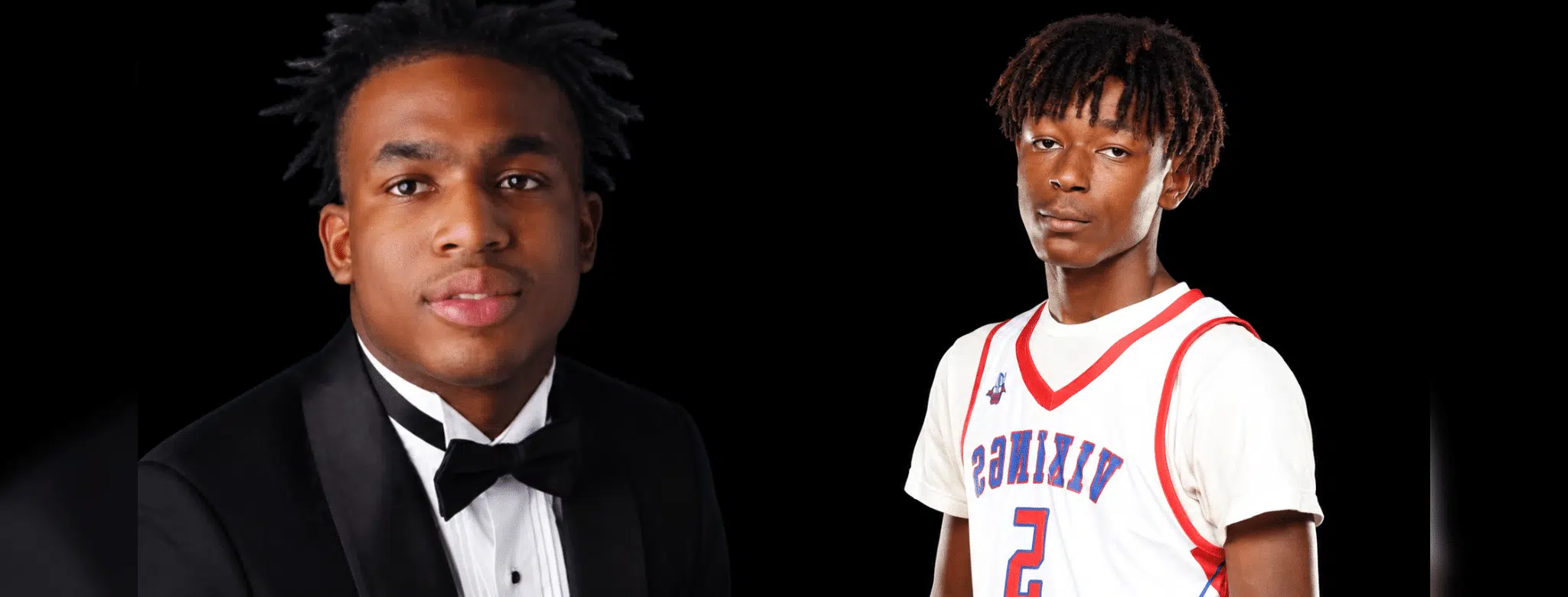
In August 2024, 18-year-old Korey O’Neill Sims Jr., a St. Aloysius High School graduate and standout basketball player, was killed in a shooting.
Just last month, 16-year-old Henry Trisby III, a Warren Central High School student-athlete with a promising future, was fatally shot.
Two young men. Two different families. Two years apart.
Both should still be here.
Trisby should be preparing for another basketball season. His coaches should be correcting his mistakes, pushing him through practice and encouraging him to become a better player and a better man.
Sims should be enjoying adulthood, making decisions about his future and discovering the world beyond high school.
Instead, their families have memories of what was and unanswered questions about what could have been.
And they are not the only ones.
For years, families across our communities have buried teenagers whose lives ended long before they had the opportunity to become the people they were meant to be.
We often remember them through Facebook posts, memorial shirts, photographs and clothing bearing their faces.
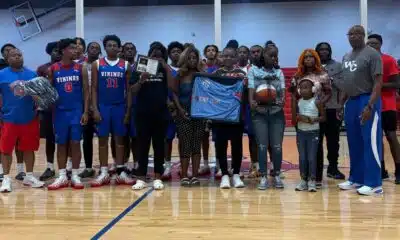
We release balloons. We light candles. We hold moments of silence. We retire jerseys and dedicate games in their honor.
These gestures are beautiful expressions of love.
But no jersey, no basketball and no ceremony can replace the young man who should have been wearing that uniform.
No memorial shirt can replace a mother’s embrace.
No photograph can replace the sound of a son’s laughter coming from the next room.
And no amount of sympathy can give a grieving parent back the child they buried.
There is another side to these tragedies that rarely makes the headlines.
Some people have never witnessed the aftermath of a homicide.
They have never seen a teenager lying lifeless in the street, his blood staining the ground where just moments earlier he was alive.
They have never watched investigators carefully examine the scene where someone’s child took his final breath.
They have never had to confront the reality of a young body being placed inside a bag and transported for an autopsy, where medical examiners must examine the wounds and determine precisely how a life ended.
To some, it is another crime scene.
Another police report.
Another breaking news story.
But to a mother, that is her baby.
The same child she carried for nine months. The same little boy whose scraped knees she kissed, whose birthday cakes she bought and whose first day of school she photographed.
The same child she once held in her arms, promising to protect him from a world she never imagined would take him away.
Now she is being asked to identify his body.
How does a mother survive that?
How does a father find the strength to carry his son’s casket?
How does a family return home after a funeral, open the bedroom door and face the belongings of a child who will never return?
We talk about the shootings. We talk about the arrests. We talk about the investigations.
But we rarely talk about the nightmares that follow.
The mother who wakes up screaming in the middle of the night, calling her son’s name.
The father who sits quietly in his vehicle because he doesn’t want his family to see him cry.
The siblings who walk past an empty bedroom every morning.
The coach who must somehow keep his team together while he is broken inside.
The best friend who still has a phone number saved, knowing no one will ever answer again.
We rarely talk about the first Thanksgiving with an empty chair, the first Christmas without another gift to unwrap or the birthday when a mother realizes her son will forever remain the same age.
And perhaps the cruelest reality is that the rest of the world keeps moving.
People return to work. Schools continue their schedules. Basketball seasons begin and end. New stories replace old headlines.
But for the families, the pain does not disappear when the news coverage stops.
Their world changed forever.
They were supposed to live. They were supposed to grow old.
And then there is another family whose pain we often overlook.
The family of the accused.
When one teenager takes another teenager’s life, two families can be devastated by a single act of violence.
One family may be preparing to bury a son while another faces the possibility of watching theirs spend decades behind bars.
There are mothers on both sides who may never again experience the simple joy of having their children home for dinner.
One may visit a cemetery. Another may visit a prison.
Their circumstances are not the same, and accountability for taking a life must never be ignored. But the suffering can reach far beyond the people directly involved.
Parents, grandparents, siblings and entire families are left carrying the consequences.
And for what?
An argument? A disagreement? A moment of anger? A decision that cannot be taken back?
Whatever the circumstances, a teenager’s life is worth more than a temporary conflict.
There is something else that must be said, even if it makes some people uncomfortable.
Too often, the faces of the young victims we mourn look like mine.
Young Black boys whose mothers raised them with hopes of seeing them become successful Black men.
Young men whose lives mattered long before their names appeared in a headline.
Their deaths should trouble every one of us.
We cannot become so accustomed to hearing about another teenage shooting that we simply shake our heads, offer condolences and continue with our day.
We cannot accept the deaths of children as an ordinary part of life.
And we cannot continue expecting grieving mothers to carry this burden alone.
Teenagers killing teenagers is not a new tragedy.
It happened last month. It happened last year. It happened 20 years ago.
And unless something changes, another family may eventually receive the phone call that every parent fears.
Another coach may find himself addressing a locker room with one player missing.
Another school may hold a moment of silence.
Another mother may have to choose a casket instead of a graduation outfit.
When will it stop?
When will we begin treating the loss of a teenage life as more than another tragedy to discuss for a few days?
When will we recognize that behind every young person killed is a family whose future has also been changed forever?
These children were not perfect. No child is.
They made mistakes. They had disagreements. They had lessons still to learn.
But they deserved the opportunity to learn those lessons.
They deserved the chance to mature, to change, to make something of themselves and to become better than they were yesterday.
A teenager should not have to be perfect to deserve a future.
Henry Trisby III should have had more basketball games.
Korey O’Neill Sims Jr. should have had more birthdays.
Both should have had the opportunity to attend class reunions 10, 20 and 30 years from now, laughing with old friends about the memories they created as teenagers.
They should have had the chance to grow gray hair, complain about getting older and watch another generation of children follow in their footsteps.
Instead, their families are left with photographs of young men who will never age.
And as the years pass, there is another heartbreaking possibility: The world may slowly forget them.
Their classmates will grow older. Their teammates will move on. Their schools will welcome new students who never knew their names.
But somewhere, a mother will still remember the exact sound of her son’s voice.
A father will still remember the day his little boy was born.
And a family will continue counting the years since the last time they saw him alive.
That is why we must remember more than how these young men died.
We must remember how they lived.
We must remember their smiles, their accomplishments, their friendships and the joy they brought to the people who loved them.
Most importantly, we must do more to prevent another family from experiencing the same heartbreak.
Because these are not just statistics.
They are our children.
Our students.
Our athletes.
Our neighbors.
Our future.
And every time another young life is taken, a piece of that future disappears with it.
They were supposed to live.
They were supposed to grow old.
They were supposed to have more time.
They deserved more time.
And they should still be here.
See a typo? Report it here.