News
Mississippi’s Miranda Rights Knowledge Ranks Low Nationally
A new survey of 3,067 adults has found significant gaps in Mississippians’ understanding of their Miranda rights.

Last updated:
VICKSBURG, Miss. (VDN) — Anyone who has watched enough Law & Order, NCIS, or CSI probably feels they know the drill.
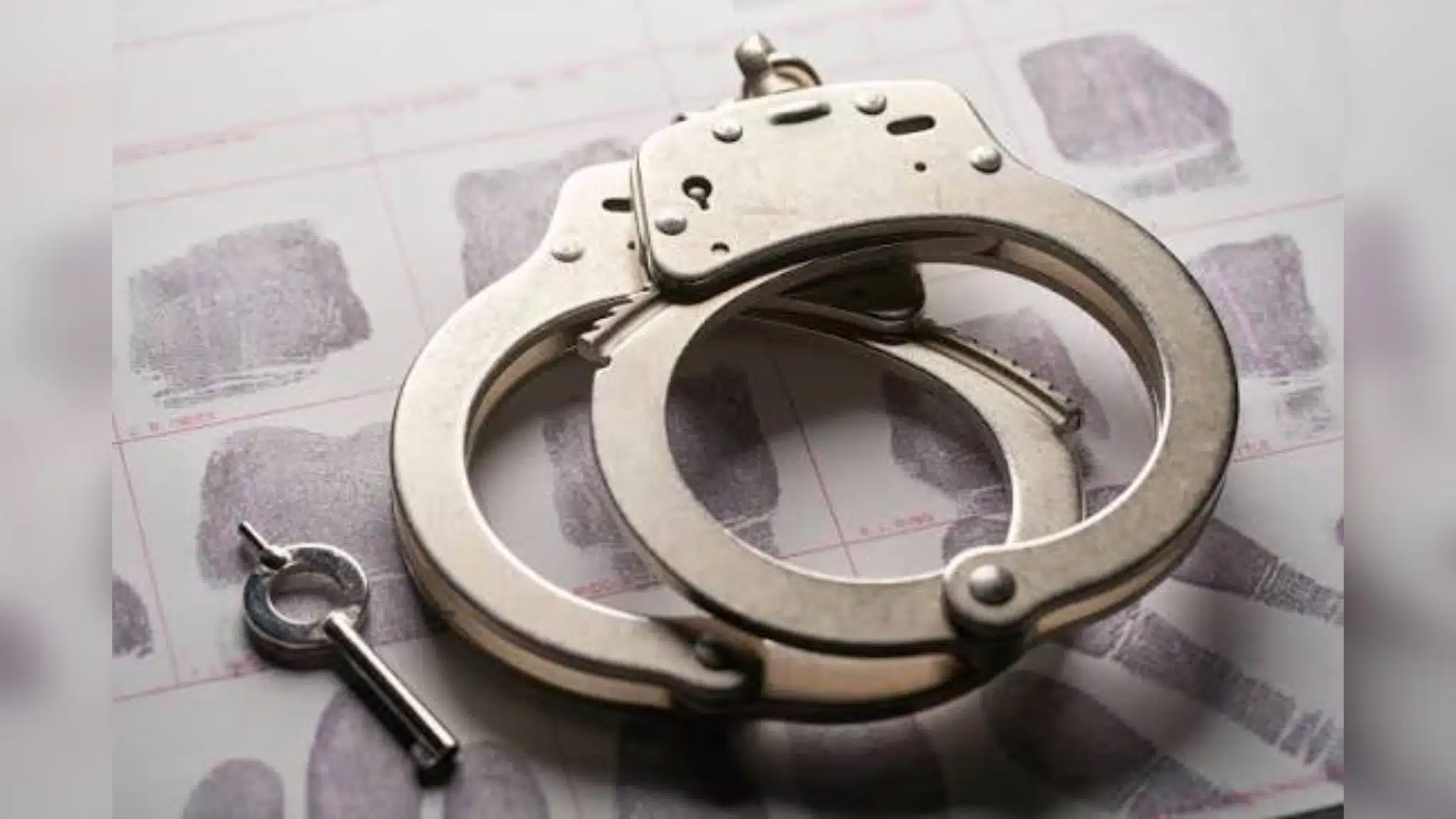
A suspect is cornered, the handcuffs come out, and sooner or later someone delivers one of the most recognizable lines in American television: “You have the right to remain silent.”
related coverage have been repeated so often on screen that they have become part of American pop culture. But recognizing the script is not quite the same as understanding the law behind it.
So how well would Americans actually do if their knowledge were put to the test?
New Jersey-based criminal defense firm Brett Rosen Law surveyed 3,067 adults and challenged them with five questions covering some of the most commonly misunderstood aspects of Miranda rights, from when police are required to give the warning to what actually happens when someone asks for an attorney.
Understanding Miranda Rights
The questions (and answers) were:
1. When are police generally required to read someone their Miranda rights? (A. As soon as they become a suspect; B. As soon as they are arrested; C. Before questioning them while they are in custody; D. Before they are charged with a crime.)
That familiar TV scene handcuffs on, Miranda warning delivered immediately is not actually the rule. Generally, the warning is required before police conduct a custodial interrogation. In other words, custody and questioning are the important combination, not simply the fact that someone has been arrested. Custody also doesn’t necessarily mean an arrest. An individual is considered to be in police custody when their freedom of movement is significantly deprived. In other words, a person is in custody when they are not free to leave. Courts consider the totality of the circumstances when making this determination.
2. Which of the following is NOT part of the basic Miranda warning? (A. The right to remain silent; B. The right to an attorney; C. The right to have an attorney appointed if you cannot afford one; D. The right to make one phone call).
At its core, a person must be told that they have the right to remain silent; that what they say can be used against them in court; that they have the right to an attorney during questioning; and that an attorney can be appointed if they cannot afford one.
3. A person in police custody clearly says, “I want a lawyer.” What must generally happen next? (A. Police can continue questioning until the lawyer arrives; B. Police must generally stop questioning them; C. Police can continue asking questions unrelated to the crime; D. Police only have to stop if the person has already been charged.)
If someone in custody clearly asks for an attorney, police generally have to stop the interrogation. They cannot simply keep questioning and hope the person changes their mind; under the Supreme Court’s rule enunciated in Edwards v. Arizona, 451 US 477 (1981), police-initiated questioning must cease until counsel is available, unless the suspect later reopens the conversation themselves.
Miranda Rights and Legal Consequences
4. True or false: Simply staying completely silent during police questioning automatically counts as formally invoking your right to remain silent. (A. True; B. False.)
Simply sitting there and saying nothing does not, by itself, formally invoke the Miranda right to silence. In Berghuis v. Thompkins, 560 U.S. 370 (2010), the Supreme Court held that a suspect must invoke the right unambiguously by invoking their rights to remain silent and to have an attorney.
5. If police question someone in custody without first giving a required Miranda warning, what generally happens? (A. The criminal case must be dismissed; B. The suspect must automatically be released; C. The unwarned statements generally cannot be used by prosecutors in their main case against the suspect; D. All evidence discovered afterward must automatically be thrown out).
If police conduct a custodial interrogation when a Miranda warning was required but was not given, the usual consequence is that the unwarned statement cannot be used by prosecutors in their case-in-chief. It does not automatically mean the arrest is invalid, the charges are thrown out, or every piece of evidence that follows becomes unusable.
The answers were combined into a Miranda Knowledge Score for each state.
And if the results are anything to go by, Wyoming residents know their rights better than anyone else in America. Residents of Wyoming achieved the highest score in the country, answering 70% of the test correctly. At the other end of the table, Alaska recorded the lowest score in the country at 45%.
In Mississippi, residents answered 54% of the questions correctly, placing the state 44th nationally. The score reflects Mississippians’ performance across all five areas tested, including when police must deliver a Miranda warning, what rights the warning contains, how someone can invoke those rights and what happens if police fail to provide the warning when required. The result suggests that while the familiar wording may be firmly embedded in popular culture, the practical details behind those protections are not always as widely understood.
Perceptions of Miranda Rights in Mississippi
1 in 4 Mississippians Think Asking for a Lawyer Looks Guilty
Knowing your rights is one thing. Feeling comfortable actually using them may be another. When respondents were asked whether requesting an attorney while being arrested makes someone look more guilty, 26% said yes.
That means roughly one in four attach at least some suspicion to a person simply asking for legal counsel, while 74% said it would not make them appear more guilty.
The survey also asked what, if anything, could persuade people to waive their right to remain silent. The most common answer was reassuring: 40% said nothing would make them waive it.
But among those who could be persuaded to talk:
- 28% said believing they had done nothing wrong would make them most likely to waive the right.
- 15% would do so because they wanted to clear up a misunderstanding.
- 8% would be motivated by wanting to appear cooperative.
- 7% said being told by police that cooperation would help them could persuade them.
- 2% said they might talk because they wanted to leave the police station sooner.
The findings suggest innocence itself may be one of the biggest reasons people feel comfortable talking. More than one in four respondents said simply believing they had done nothing wrong would be enough to make them most likely to waive their right to remain silent.
Miranda Rights Education
America Learned Miranda Rights From Hollywood
For nearly half the country, Miranda education apparently came with opening credits.
Asked where most of their knowledge of Miranda rights came from, 48% cited TV shows or movies, vastly more than any other source.
By comparison:
- 12% admitted they do not really know much about Miranda rights at all.
- 8% learned primarily through legal education or work.
- 8% cited personal experience.
- 7% said news or other media.
- 7% credited school.
- 6% learned mainly from friends or family.
- 4% said social media.
So while police procedurals may not qualify as law school, they appear to have played an outsized role in peoples’ understanding of one of the country’s most recognizable legal protections.
Confidence in Miranda Rights Knowledge
Most People Think They Would Know What to Do When Police Read Them Their Rights
Finally, respondents were asked to imagine something considerably less comfortable than answering an online survey:
If you were arrested tonight, how confident would you be that you knew exactly what to say, and what not to say to police?
Confidence was relatively high:
- 29% said they would be very confident.
- 40% were somewhat confident.
- 21% were not very confident.
- 10% were not at all confident.
In other words, most people believe they have at least a reasonable idea of how they would handle themselves during police questioning, even though the Miranda Test itself revealed sizable gaps in knowledge across the country.
“Miranda rights are probably among the most famous legal rights in America, but familiarity with the words does not necessarily mean people understand how the protections work in practice,” says Brett Rosen, partner at Brett Rosen Law. “What stood out from the survey was the gap between confidence and actual knowledge. Many people feel they would know exactly what to do if they were arrested, yet misconceptions remain about when Miranda warnings are required, how someone invokes their rights, and what happens when a warning is not given. And with almost half of Americans saying they learned most of what they know from TV and movies, it is perhaps not surprising that fact and courtroom fiction sometimes get mixed.”
See a typo? Report it here.