Education
Young Kids Are Struggling With Skills Like Listening, Sharing, and Using Scissors

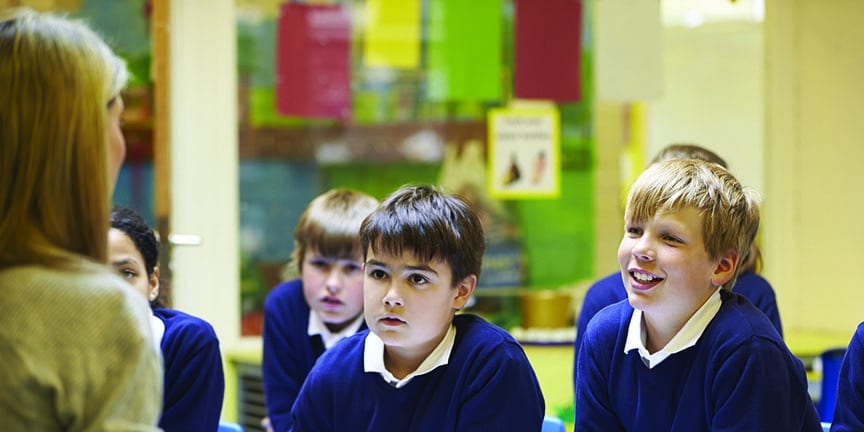
Teachers report that young students are struggling with fine motor skills, such as using scissors and pencils. They are also having difficulty with social-emotional skills, like following instructions and sharing.
Most preK-3 teachers said these tasks are more challenging for children this school year than for kids five years ago. This is according to the Education Week State of Teaching survey. Experts say this likely stems from the pandemic’s impact. Even students who weren’t in grade school during school closures are still experiencing the effects.
“These fundamental skills that seem so basic are actually really important to children’s overall development and growth,” said Amanda Fellner. She is a lecturer in the early childhood education program at Teachers College, Columbia University, and a faculty co-director of the Rita Gold Early Childhood Center. “How are we supporting teachers on this? How are we ensuring that they can focus on the things that are important and making sure those fundamental skills are being built?”
The State of Teaching survey polled a nationally representative sample of 1,500 teachers in the fall. Only teachers who teach grades preK-3 answered this question.
Teachers identified social-emotional skills—listening, following directions, sharing, cooperating with others, and taking turns—as the most problematic tasks for children today. They compared these to their peers five years ago.
Most teachers also reported that using scissors, crayons, pencils, and pens, as well as tying shoes, is more challenging now.
These results align with findings from the National Institute for Early Education Research (NIEER) at Rutgers University. Their parent surveys on young children’s learning and development, conducted six times since spring 2020, show similar trends. While some social and emotional problems have slightly declined since the pandemic’s height, the share of parents reporting issues with pro-social behaviors, like making friends and sharing, has increased. In the most recent survey, 28 percent of parents indicated these skills were an issue.
Steven Barnett, the senior co-director of NIEER, suggested several reasons for young students’ lagging social and fine motor skills. He cited the pandemic’s disruption of schools as a primary factor. Preschool and kindergarten enrollment declined during the height of the pandemic. Even if children were enrolled during 2020 or 2021, they might have experienced remote learning due to school closures.
This means that students now in early elementary grades might have missed out on learning how to interact with their peers in a classroom setting. Additionally, students with disabilities might not have received early intervention services.
Another potential reason is the increase in young children’s screen time. Research has shown that screen time shortens attention spans and makes it difficult to focus. Increased reliance on screens might mean children are going on fewer play dates or spending less time using crayons or scissors, Barnett added.
“When you see kids trying to swipe books, like they’re interacting on a tablet or a cellphone, you get a sense that maybe some of the traditional tools aren’t as familiar,” he said.
See a typo? Report it here.